Details of the Summer Visits arranged for 2026. Click the images below to see larger versions.
You need to book, and please download this form, and follow the instructions in it, including how to pay. Please return the completed form preferably by email to alisonpickup@btinternet.com.
Some events may be limited in the number of attendees, in which case priority in booking may be given to members (so if you’re not a member, why not join now).
Norwich Castle Keep & Museum
Friday 29th May 9:15 a.m. – 4:30 p.m.
Meet at 9:15 at Bridge Street Bus Stop (opposite the sweet shop)
Cost:£30.00
Limited to 25 people
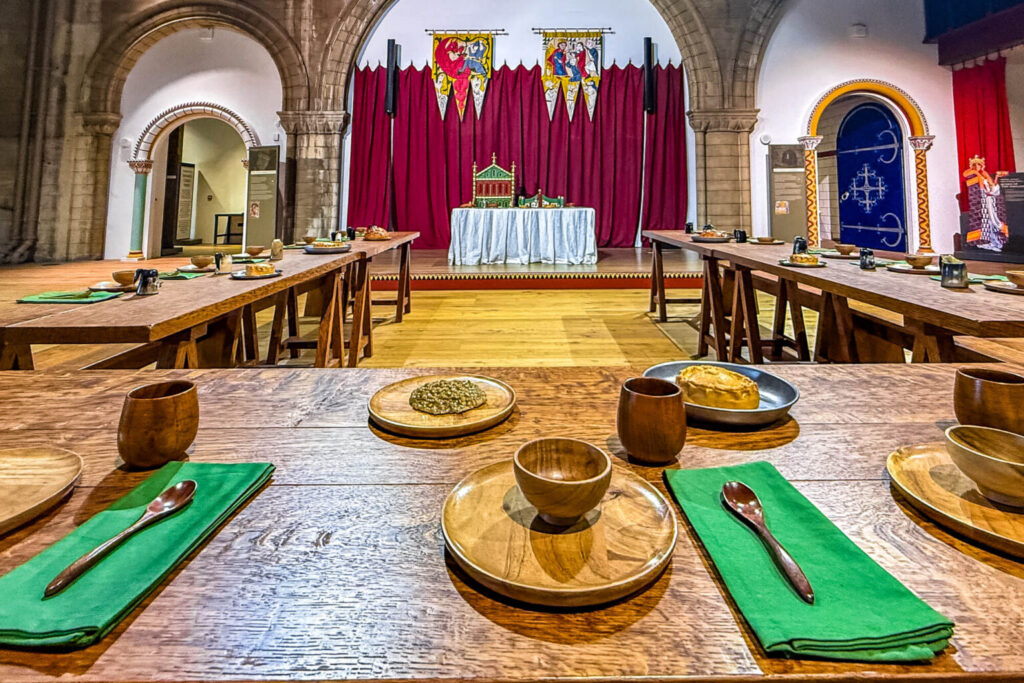
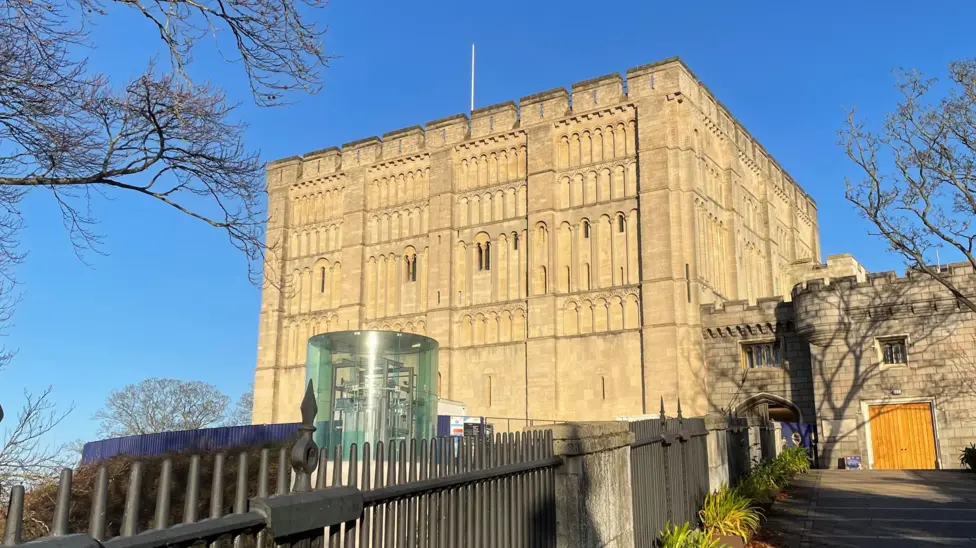
As members will be aware we have been asking for interest in a visit to Norwich Castle Museum with a tour of the recently restored keep (at a cost of over £27m). We are glad to tell you the interest has been sufficient for us to book the coach and the tour. The coach will leave from Bridge Street Bus Stop, at 9:15 (prompt) leaving the castle at 3:00 to return to Framlingham at approximately 4:30. This will allow us to arrive at Norwich Castle in good time for the tour at 11:00 a.m. The coach will drop off close to the lift which takes you up to the keep. The tour takes approx. 1hr and thereafter you are free to look around the museum and the keep on your own. The ticket includes museum access. The new medieval gallery is highly recommended. There are 2 cafes at the venue for lunch.
It is very important that you let us know if you need wheelchair access as wheelchairs are limited to five for safety reasons. Could you also let us know if you have a Norfolk Museums pass.
There is a Channel 4 documentary about the rebuilding of Norwich Castle (narrated by Stephen Fry) which can be found at https://www.channel4.com/programmes/the-castle-rebuilding-history or if your television can access Channel 4 streamed services, search for “The Castle Rebuilding History”. If you have not seen the programme, it is strongly recommended viewing before the visit.
Hadleigh Town Centre and Church Tour
Thursday 25th June 10:00 – 12:00 £12.00
Meet 9:50 a.m. outside St Mary’s Church
Cost: £12.00
Limited to 25 people
This guided tour is in two parts – the historic town centre and the church. We will be divided into two groups one starting with the Church and the other with the town centre and swapping over so that everybody benefits from smaller groups but gets to see everything. At time of booking, it would be helpful if you could decide with which tour you would prefer to start.
Hadleigh is a wool town with a long and sometimes prosperous history which is reflected in many of the buildings and the magnificent church of St. Mary’s.
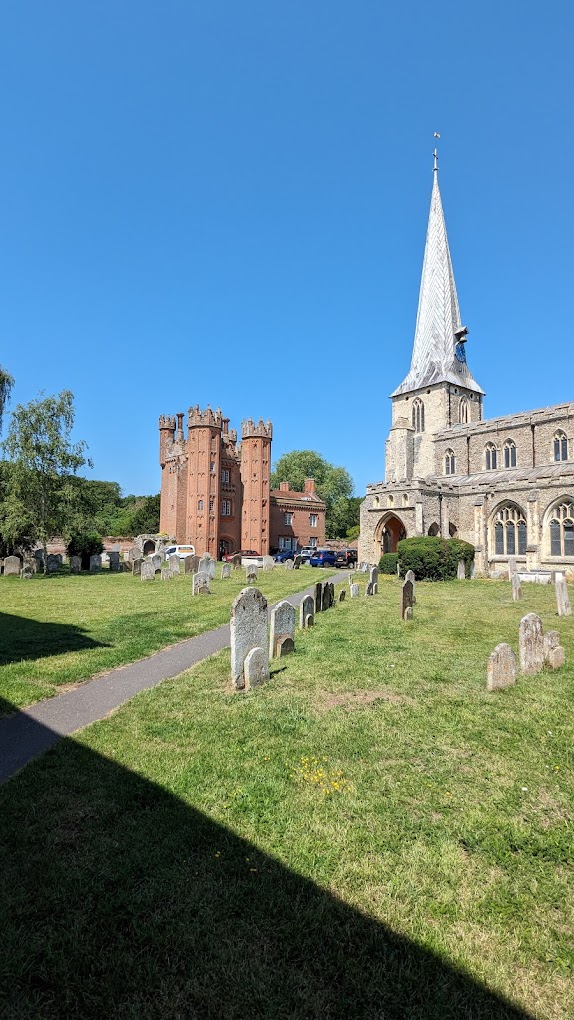
Of particular note is the Deanery Tower. This spectacular building of 1495 overlooks the churchyard close to the Guildhall-Town Hall complex (see below) which is a striking timber-framed vernacular building, but this gatehouse is a highly elaborate piece of architecture built by William Pykenham, who held the senior ecclesiastical offices of Dean and Rector of Hadliegh and Archdeacon of Suffolk in the late-15th century. It was to be the entrance to a palatial residence which was never completed because Pakenham died shortly after the tower was built.
The Guildhall complex comprises of a fine Grade I listed building of Medieval origin containing many interesting historical and original architectural features and a Victorian Grade II addition which offers a finely proportioned first floor room. The management of the building has been in the hands of the Hadleigh Market Feoffment Charity since 1438. In 1989 the Trusteeship of the Charity was transferred to Hadleigh Town Council who, with considerable financial assistance from Babergh District Council, initiated a complete renovation and improvement of facilities to bring several rooms back into public use.
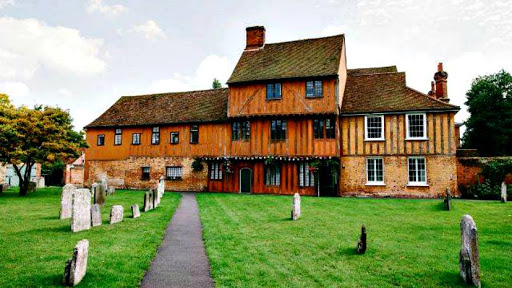
St. Mary’s Church is one of the finest wool churches in the country and has a late 13th-century or early 14th-century tower and 14th-century aisles. The church was almost wholly reworked in the 15th century, when the arcades were rebuilt, and the clerestory, south porch and northeast vestry added. At this time also the whole building, except for the tower, was re-fenestrated. In the 19th century and early 20th century the church was extensively restored. The church is constructed of flint rubble with stone dressings and has leaded roofs and spire. It has an aisled nave and chancel, a western tower, a two-storey south porch and a north vestry. On 26 April 1950 the church was designated a Grade I listed building. Its listing by Historic England records the principal reasons for designation as its size, the quality of its late-medieval architecture and its interior.
See: https://historicengland.org.uk/listing/the-list/list-entry/1036820?section=official-list-entry for more details.
Bawdsey Radar Museum
Friday 18th September 11:00 – 1:00 £12.00
Meet at 10.55 outside the museum.
Cost: £12.00
Limited to 25 people
Bawdsey Radar, Transmitter Block, Bawdsey, Suffolk, IP12 3BA
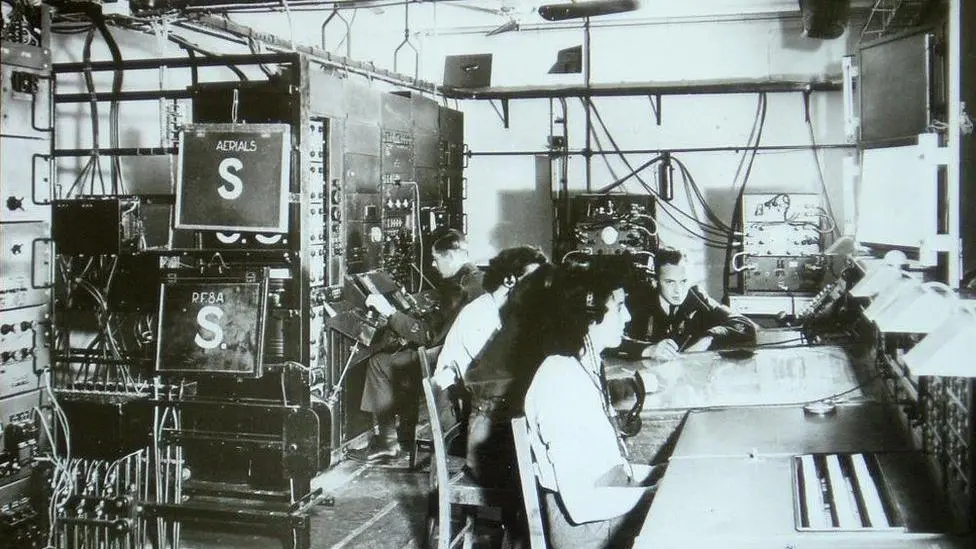
The museum is usually closed on Fridays so we should have the museum to ourselves. We will receive a guided tour and refreshments as part of our visit.
On 24th September 1937, RAF Bawdsey became the first fully operational Radar station in the world. A challenge was identified after WW1, but It took more than a decade for an air-defence exercise to be carried out. In 1934, this exercise resulted in more than half of the bombers getting past the defences, despite their routes being known. This less-than-satisfactory outcome led the Air Ministry to investigate the idea of radio ‘death rays’ which would eliminate or disable pilots and their aircraft.
Robert Watson-Watt dismissed the idea of death rays but said that radio beams could be bounced off enemy aircraft to detect them. He asked his assistant, Arnold “Skip” Wilkins, to undertake calculations to demonstrate the feasibility of ‘aircraft detection by radio waves’. On 26 February 1935, Watson-Watt and Arnold Wilkins successfully demonstrated their system using a BBC transmitter to pick up a bomber being used as a test target.
In February 1936. the research scientists occupied Bawdsey Manor House, and the stables and outbuildings were converted into workshops. 240ft wooden receiver towers and 360ft steel transmitter towers were built, and Bawdsey became the first Chain Home Radar Station. By the outbreak of World War 2 a chain of radar stations was in place around the coast of Britain. On 3rd September 1939, the scientific team was moved from this vulnerable east coast site to Dundee and Bawsdey became an operational rather than a research station.
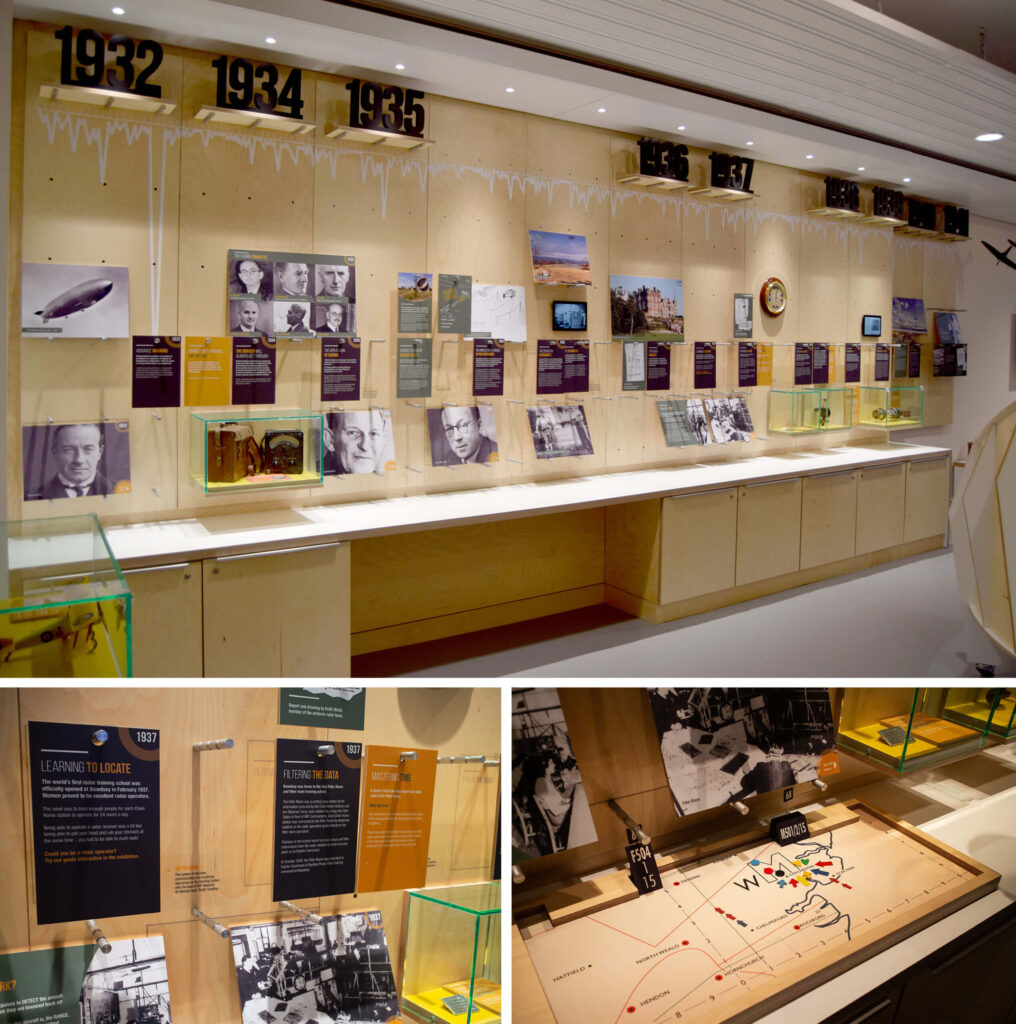
Radar stations such as Bawdsey were to prove invaluable intelligence during the Second World War and particularly during the Battle of Britain when 2,600 Luftwaffe planes were set against the RAF’s 640. Bawdsey bombed on at least 12 occasions, but huge earth revetments supported by reinforced concrete walls and a roof specially designed to dissipate the force of an overhead blast, prevented the destruction of the station.
Bawdsey was used as an RAF base through the Cold War until the 1990s when the Bloodhound Missile was the last ‘tenant’ in this base. On 31st May 1990 the Bloodhound force ceased operations. Sadly, the last of the giant transmitter masts came down in 2000. In 2017 a Heritage Lottery grant of £1.4m started the restoration of the site and the formation of the museum.