Original article by Dr Duncan Campbell, abridged by Simon Garrett.
Click on any image for a larger view.
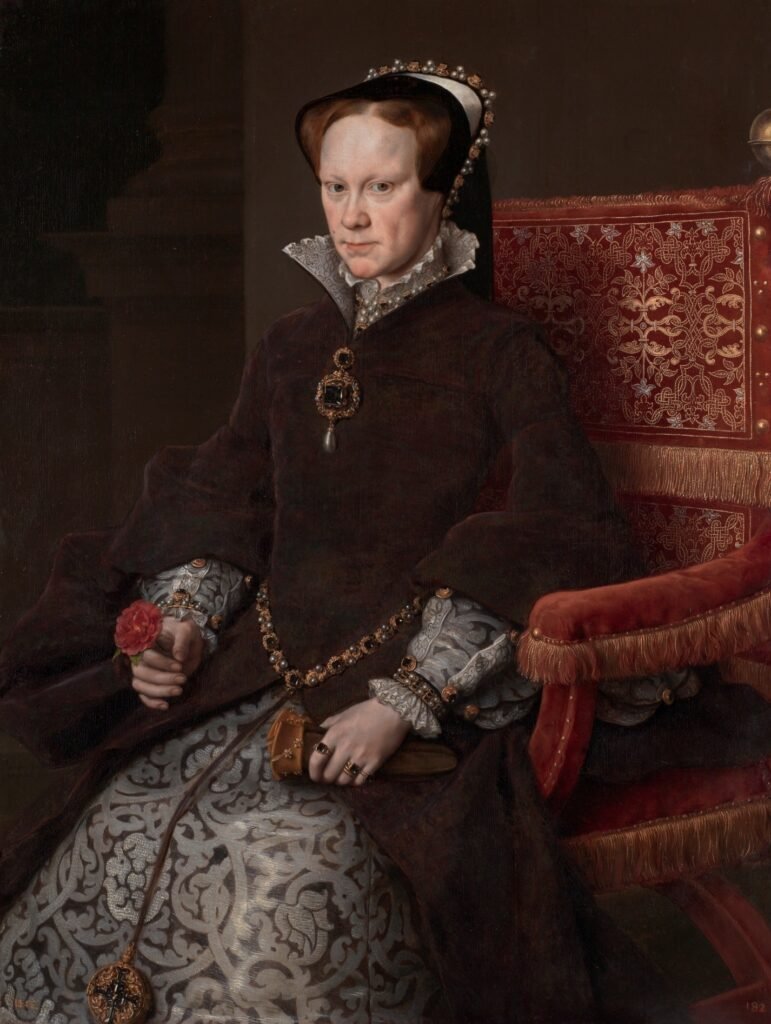
This is the story of Mary’s succession to the throne of England, Framlingham’s role and the events of July 1553. Queen Mary was proclaimed Queen in Framlingham Castle.
Mary reigned for only five years, and after her death the story was recorded by Protestant chroniclers keen to condemn Mary’s reign. By the 17th century, the religious persecution of Protestants had led to her being called “Bloody Mary.” John Knox criticised her, and John Foxe vilified her in his book, which remained popular for centuries. More recent research has uncovered a more nuanced story.
The information in this article is an abbreviated version of an article by Dr Duncan Campbell published in the Autumn 2026 edition of the Framlingham History Society Newsletter1.
Mary’s castle at Framlingham
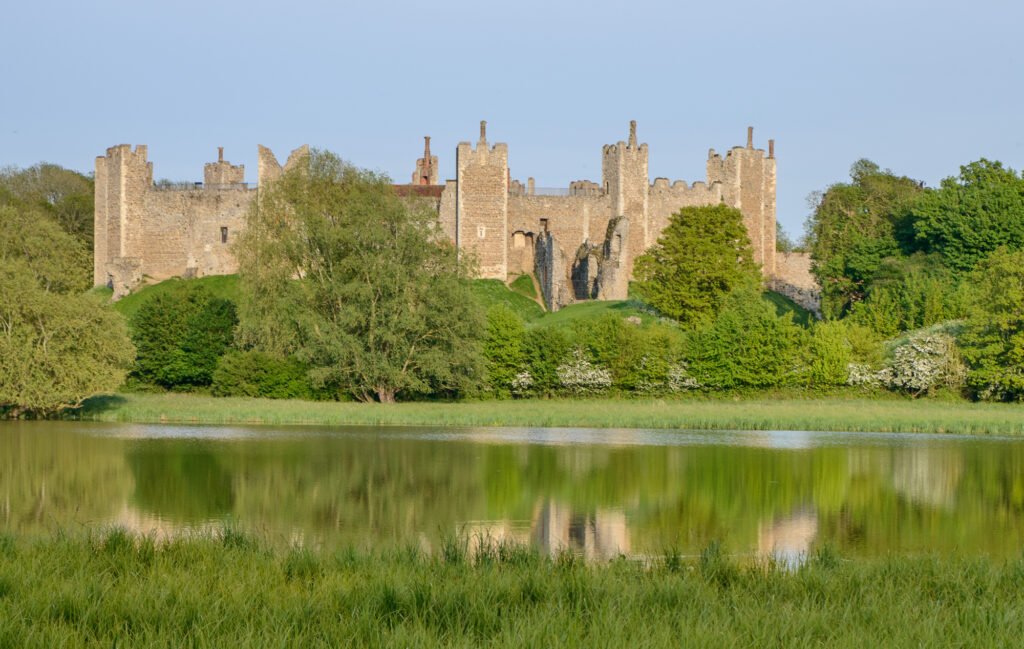
In 1547, the death of Henry VIII made Mary the largest landowner in East Anglia: under her father’s will, she received 32 estates in Norfolk, Suffolk, and Essex. This included the fortified Framlingham Castle, which had recently belonged to the disgraced Thomas Howard. Along with the inheritance, Mary received for the first time in her life a large support group “on the land” — clients from the local nobility and common people.
Succession crisis
Three legitimate children of Henry VIII survived him: Edward, Mary and Elizabeth. Edward as the only son succeeded to the throne as Edward VI after Henry’s death. The line of succession then went to Mary, the older daughter and then to Elizabeth, the younger daughter.
Edward succeeded to the throne aged ten but six years later he fell ill early in 1553 and died on 6th July.
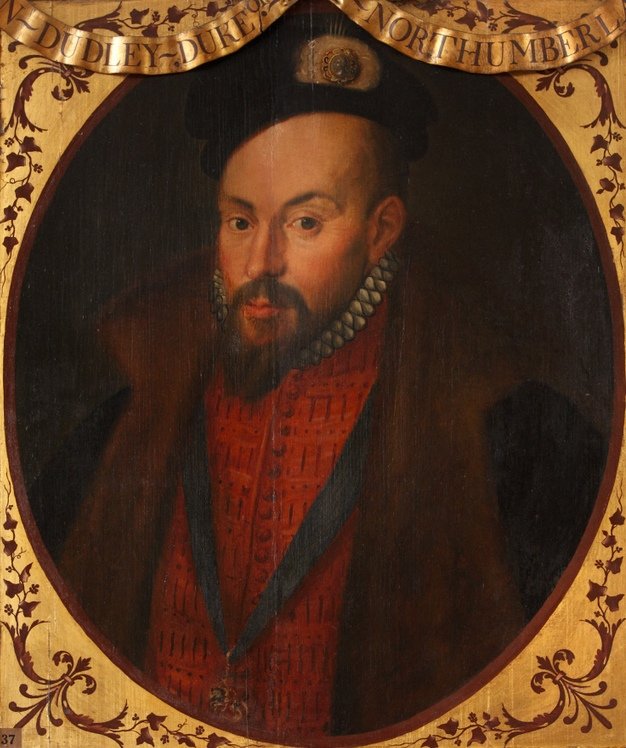
What followed was a real-life Game of Thrones. The story is anything but straightforward; it is a complex narrative of treachery, political manoeuvring and betrayal, and success achieved through Mary’s unwavering determination. It features a villain (John Dudley, the Duke of Northumberland), a heroine (Mary Tudor), a troupe of clowns (the Privy Council), a young tragic woman caught up in it all (Lady Jane Grey) and self-serving noblemen.
Timeline of Mary’s succession
The story begins just before the death of Edward VI, Henry VIII’s son. At the time, a regency council led by John Dudley, Earl of Warwick (later Duke of Northumberland), served as a substitute ruling council for the underage Edward. Dudley was a formidable soldier and a staunch Protestant opposed to the Catholic Church.
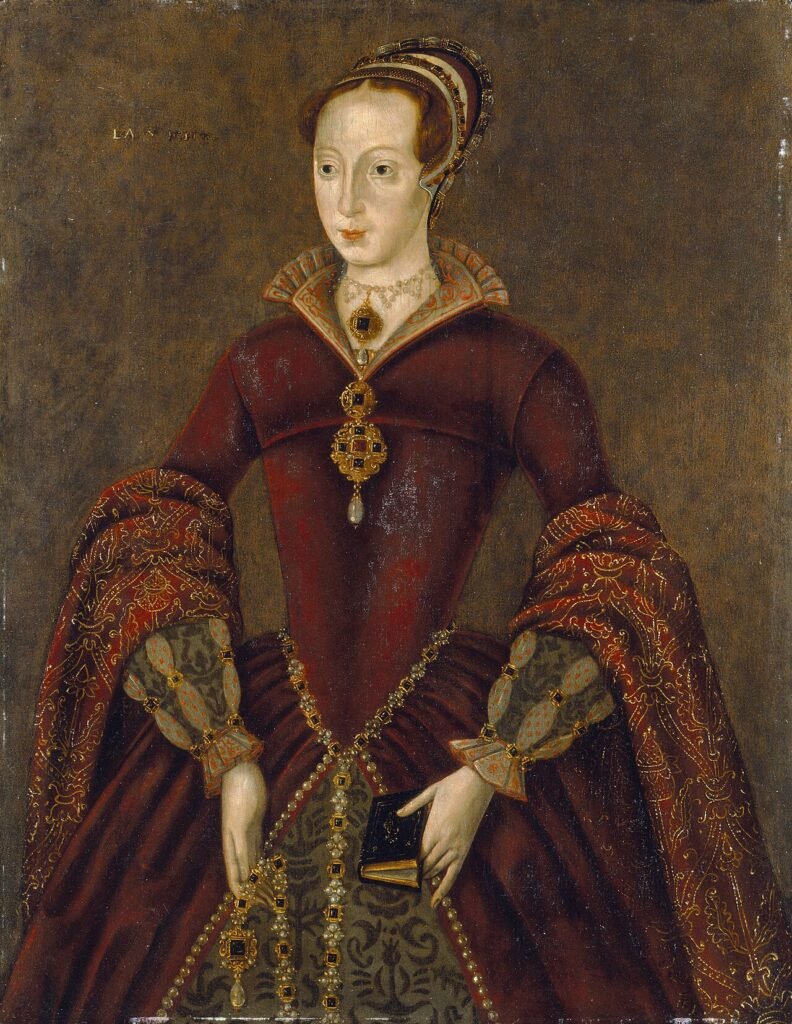
In February 1553, Edward VI fell ill, and by June he was in a hopeless condition. The King realised that Mary’s succession would jeopardise the English Reformation and restore Catholicism. This fear was shared by many nobles and some members of the Privy Council. Therefore, Edward sought to change the law so that Mary and Elizabeth could not inherit the crown. He aimed to bypass his half-sisters and settle the Crown on his first cousin, the sixteen-year-old Lady Jane Grey. This directly contravened Henry VIII’s Third Succession Act of 1544. Rushed legislation promoted by Dudley was passed, but the Privy Council was divided. The legislation has been described as bizarre, illogical, and illegal.
By the end of May, Edward was beyond recovery. He died on 6th July at the age of fifteen at Greenwich Palace. Dudley had called Mary to London to be with her dying brother, no doubt with the intention to imprison or to kill her. Mary clearly learned about Dudley’s plan for Lady Jane Grey and fled her home in Essex, probably hoping to reach her estates in Norfolk and gather support. She reached Kenninghall Manor (near Bury St Edmunds) by 9th July. From there she sent letters to gather her supporters.
On 12th July, Mary and a growing band of supporters moved to Framlingham Castle, a more defensible location.
Dudley raised and a group of soldiers pursued Mary, but did not go straight to Framlingham, hoping first to gather a larger army before attempting to capture Mary.
On 14th July, Dudley’s forces continued northwards and received reinforcements from the Midlands.
But by 15th July, Mary’s support was also growing, and her forces had grown to about six thousand men.
By 18th July, many members of the Privy Council had sided with Mary. Dudley learned that he no longer has support of the Privy Council, and did not take his army to Framlingham as he had intended. Mary wrote a document in Framlingham Castle calling for the arrest of Dudley and his supporters (a copy of this document is in the Lanman Museum on Framlingham Castle)2.
On 19th July, the Privy Council proclaimed Mary as Queen.
By 20th July, Dudley learned of his arrest warrant. He declared Mary as Queen and surrendered his forces.
Mary entered London in triumph on 3rd August.
Dudley was tried, and executed on 22nd August. Lady Jane Grey was also subsequently tried, and executed on 12th February the following year (1554).
After Mary became Queen
Soon after becoming Queen, Mary returned Framlingham Castle and surrounding estates in Suffolk and Norfolk to Thomas Howard, the 3rd Duke of Norfolk, but he did not live in Framlingham Castle. No evidence has been found that Mary ever returned to Framlingham, but perhaps she did!
Footnotes
- This article is an abbreviated version of one published in the Framlingham Historical Society Newsletter, Autumn 2026. (The latest edition of the Newsletter is available initially only to members of the society.) The full article, by Dr Duncan Campbell, is the result of his extensive research, and contains much more detail and an detailed bibliography. ↩︎
- In the Lanman Museum (in Framlingham Castle) there is on display a copy of Mary’s letter to arrest Dudley and others. There is an article on this (with an illustration of the document) on the Lanman Museum website here. ↩︎